
To fill the hole after stump grinding, rake most of the grindings out, backfill with clean topsoil or a sandy loam in layers, tread each layer down, and leave it mounded 20 to 30 mm above the lawn. Then lay turf or sow seed on top. Do not shovel the grindings back in and turf over them: the wood keeps rotting, the ground drops and you get a soft dip by the time the next wet season is over.
If you have typed how to fill hole after stump grinding into Google, you are standing in a backyard looking at a bowl of chips and dirt where a tree used to be. Here is what we tell every customer on the day, and what we see when the last bloke did it wrong.
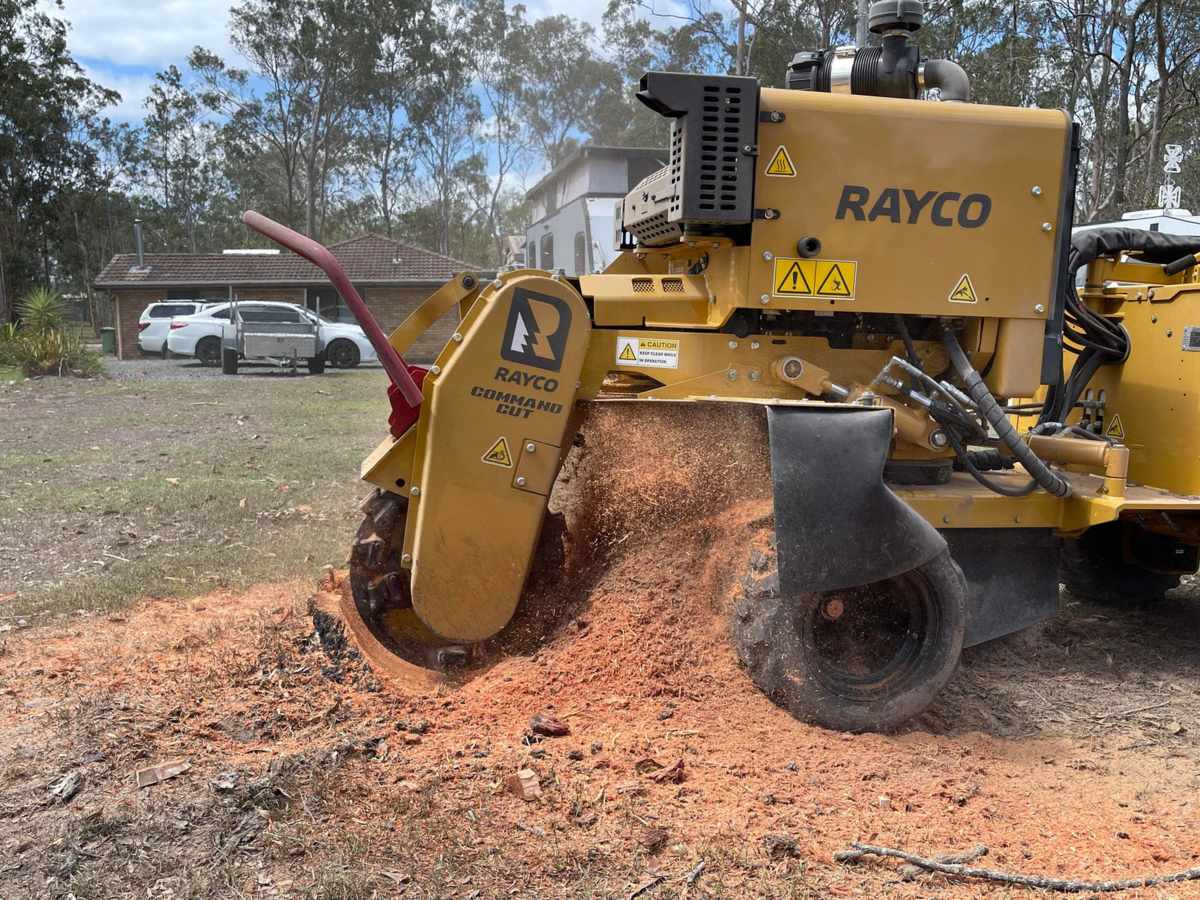
Does stump grinding leave a hole?
Yes, but not the one people picture. The grinder does not dig the stump out. It chews the stump into chips 200 to 300 mm below ground level as standard, and those chips, mixed with the soil the roots were growing in, fall straight back into the space. So what you are left with on the day is a shallow bowl of loose grindings, usually a bit wider than the stump was, with a mound of spare grindings beside it. Walk on it and it feels soft.
How big the bowl is depends on the stump. A cocos palm stump leaves a neat, fibrous hole. A 600 mm gum stump with the surface roots chased leaves a bowl the size of a bath, with trenches running off it where the roots went. A root plate from a storm-felled tree is bigger again. The guide to what to do with the grindings covers the pile; this one covers the hole.
How to fill a hole after stump removal: what to put in it
Not grindings. That is the whole trick. Fresh grindings are green wood and they will rot for the next year or two. As they rot they shrink, and anything sitting on top of them sinks with them. A shovel or two mixed through the backfill does no harm. A barrow-load does. Here is the short version of what works where.
| Fill | Use it for | Watch out for |
|---|---|---|
| Clean topsoil or garden mix | The bulk of the hole, under turf or garden bed | Buy a screened product; builder’s fill with clay lumps packs badly |
| Sandy loam or turf underlay | The top 100 to 150 mm under new turf | Drains well and roots take; do not skimp on it |
| Grindings, a shovel or two | Mixed through the lower backfill | More than that and the spot sinks; never a layer of pure chips |
| Crusher dust or road base | Where a path, slab or fence post is going in the same spot | Tell us before the day so we grind deeper and clean the hole out |
| Aged mulch or compost | On top of a garden bed over the old stump, not in the hole | Keep timber mulch clear of the house and off bare soil you are about to plant |
For a lawn, the turf growers are blunt about the top layer. Lawn Solutions Australia’s turf preparation guide calls for 100 to 150 mm of underlay under new turf, and that applies to a stump hole as much as a whole new lawn. On Brisbane clay, work a bit of gypsum through the topsoil as well so the spot drains like the lawn around it.
How to fill a stump hole, step by step
A Saturday morning job with a shovel, a rake and a wheelbarrow. A typical single domestic stump needs between a couple of bags and a quarter of a cubic metre of soil, so measure the bowl before you drive to the landscape yard.
1. Rake out the grindings. Pull most of the chips out of the hole and onto the mound. Pick out the lumps of root. Get down to the soil the cutter wheel left behind. Spread the grindings on the garden beds as mulch, well away from the house, or bin them.
2. Check for roots and services. Big surface roots that the grinder chased out will have left trenches. Fill those too. If the stump was near a water meter, a gas line or a sprinkler run, go gently: on a Caboolture job with sixteen stumps the water meter line ran right beside the biggest one, so that stump was only part-ground and the rest came out by hand. That spot gets filled by hand as well.
3. Backfill in layers. Tip in 100 mm of topsoil, tread it down with your boots or tamp it with the back of the shovel, water it in, and repeat. Three or four layers for a standard hole. Compacting in layers is what stops the dip; one big tip of loose soil settles for months.
4. Mound it. Finish 20 to 30 mm proud of the surrounding lawn. It looks wrong for a fortnight and right by Christmas; finish it flush and it is a hollow by autumn.
5. Top layer. For turf, the last 100 to 150 mm should be sandy loam or a bought turf underlay. For a garden bed, finish with garden mix and mulch over it.
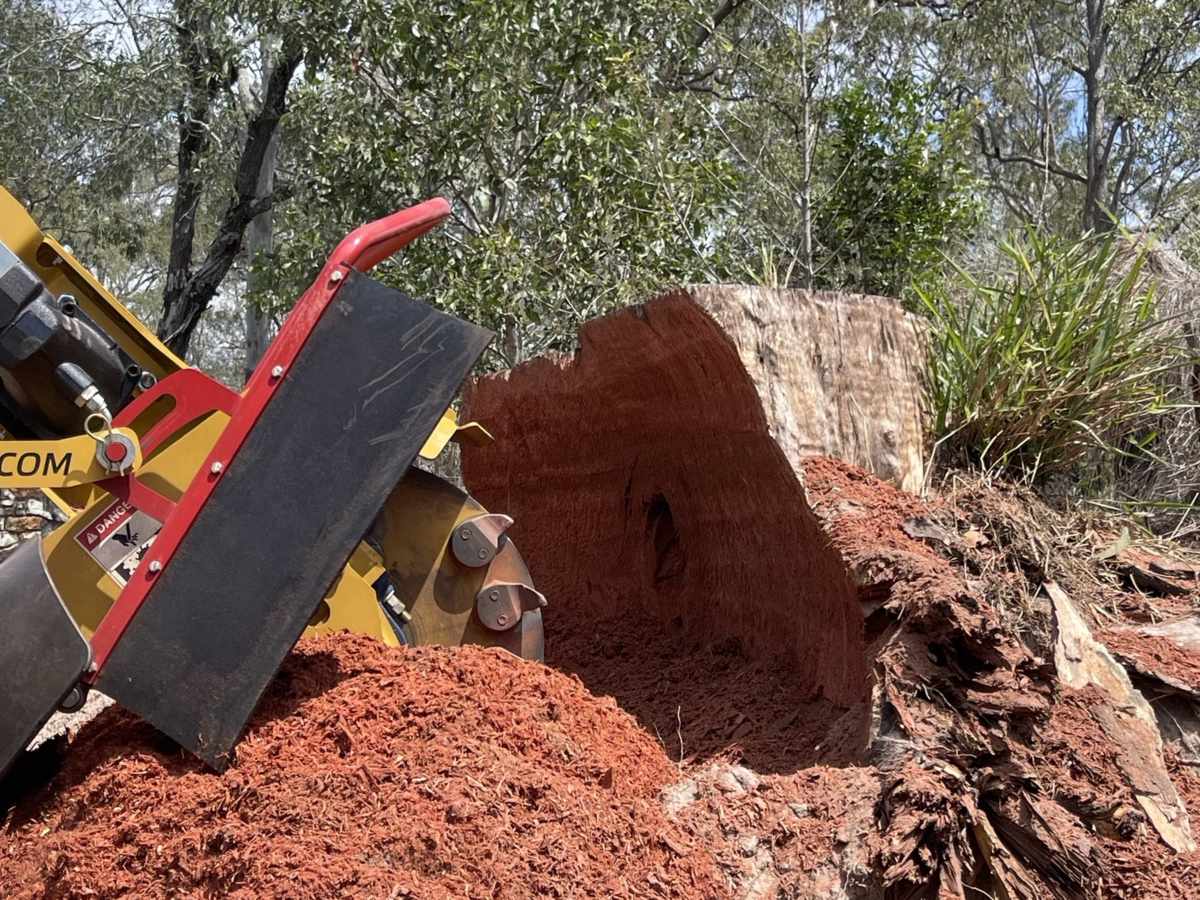
Turf or seed over the old stump?
Turf, nine times out of ten. A patch of rolled turf takes in a couple of weeks, hides the spot straight away and the roots knit into the underlay while the soil below is still settling. Match the variety to the rest of the lawn: most Brisbane yards are buffalo, couch or kikuyu, and a patch of the wrong one looks worse than bare dirt. Lay it on the mounded underlay, press it down, and keep it damp every day for the first two weeks.
Seed works if you are patient and the lawn is couch or kikuyu, which both creep and will close over a patch anyway. There is no buffalo seed to buy, so on a buffalo lawn it is turf or a slow fill from the runners. Either way, keep the dogs and the mower off it for three weeks.
Why the spot keeps sinking for six months
Two things are going on under the grass. The soil you tipped in is settling, which is normal and why you mounded it. And whatever wood is left below the grinding depth is rotting, which takes years and makes the ground drop a little more each wet season. That is why we grind 200 to 300 mm below ground as standard and not the 100 mm some people ask for. An Albany Creek owner came to us wanting six stumps, five around 300 mm across and one about 500 mm, ground 100 mm down so he could grass over them. At 100 mm you are turfing straight over a block of green timber, and the lawn tells on you by the second summer.
If a slab, a path, a deck footing or a new tree is going where the stump was, say so when you book. We grind deeper, chase the roots harder and clean the hole out so your builder or landscaper is working on soil, not chip. The site preparation guide covers what to have ready before the grinder arrives.
Fill it yourself or have us do it?
Most people fill the hole themselves. It is not hard. If you would rather not, we can take the grindings away with us and leave the hole backfilled with topsoil, priced on top of the grind and agreed before the day. Grinding starts from $250 for a typical single domestic stump, ground 200 to 300 mm below ground with the surface roots chased and the chips raked off, and on multi-stump jobs the discount runs up to 50 per cent. If the beds around the old stump need topping up once the lawn is in, you can order aged forest mulch online through the group and have it dropped on the driveway. On this site it is $400 for 10 cubic metres delivered.
We grind across Brisbane’s northside, from Albany Creek and Chermside out to North Lakes, the whole southside, Forest Lake and the south-west around the yard, and Ipswich. The cost page has the full list of what moves the price.
Got a stump and a lawn you want back? Text a photo of the stump, with a boot in it for scale, to 0449 003 606 with your suburb, or use the quote form, and tell us if turf is going over it. We will grind it to suit.
Frequently asked questions
How do I fill a hole after stump removal?
Rake most of the grindings out of the hole, backfill with clean topsoil or garden mix in 100 mm layers, treading and watering each layer in, and finish 20 to 30 mm above the surrounding lawn. Put 100 to 150 mm of sandy loam or turf underlay on top if turf is going over it. A shovel or two of grindings mixed through the lower fill is fine; a layer of pure chips will sink.
Can I fill the stump hole with the grindings?
No. Fresh grindings are green wood that rots and shrinks for a year or more, so anything on top of them sinks. Spread the grindings as mulch on garden beds away from the house, or bin them, and fill the hole with soil.
Does stump grinding leave a hole?
It leaves a shallow bowl of loose chips and soil, usually 200 to 300 mm deep and a little wider than the stump, plus trenches where surface roots were chased. The grinder does not dig the stump out, so the hole fills with grindings as it cuts and feels soft underfoot until it is backfilled with soil.
How long after stump grinding can I lay turf?
Straight away, once the hole is backfilled with soil, compacted in layers and mounded slightly. Lay the turf on 100 to 150 mm of sandy loam or turf underlay, keep it damp daily for two weeks and keep the mower off it for three.
Why is the ground sinking where the stump was?
Loose backfill settles for a few months, and any wood left below the grinding depth rots for years and drops a little each wet season. Mounding the fill handles the settling. Grinding 200 to 300 mm below ground, rather than 100 mm, leaves far less timber to rot under the lawn.
Will grass grow over a ground stump?
Yes, as long as there is 100 to 150 mm of real soil between the grass roots and the remaining wood. Turf over grindings goes yellow and sinks. Turf over topsoil and underlay knits in within a couple of weeks and matches the rest of the lawn.