
What to do with stump grindings comes down to three choices: spread them as mulch on garden beds and paths well away from the house, use a small amount mixed back into the hole with topsoil, or get rid of them in the green bin or on the trailer. The one thing not to do is fill the hole with pure grindings and turf straight over it, because the wood rots, the ground sinks and you get a dip in the lawn by Easter.
Every stump we grind leaves a pile. A typical backyard gum stump, ground 200 to 300 mm below ground with the roots chased, makes somewhere between a couple of wheelbarrows and a small trailer-load of chips, sawdust and soil. People stare at it and ask the same question. Here is what we tell them.
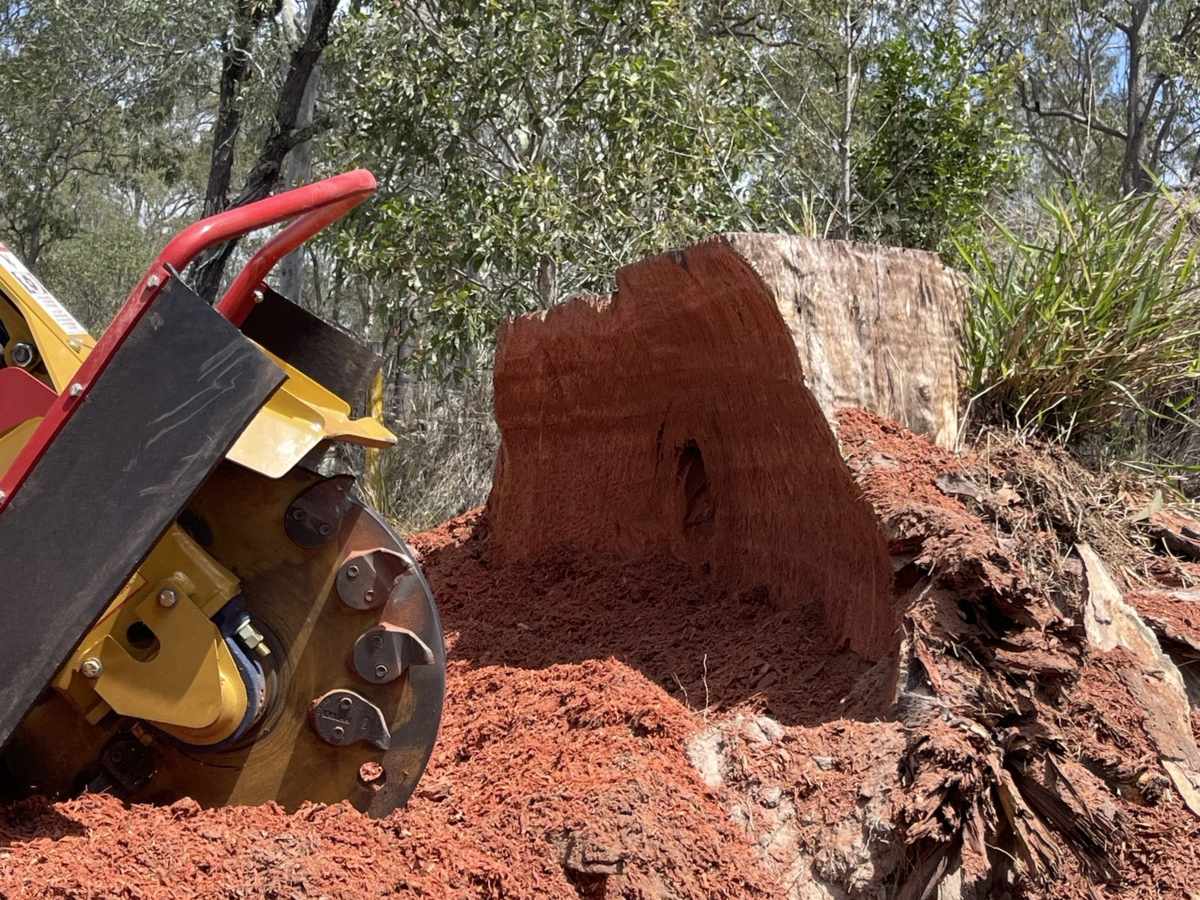
What are stump grindings, exactly?
Not mulch. Not yet. Grindings are a mix of wood chip, fine sawdust, bark, root fibre and whatever dirt the cutter wheel threw up with it. On the clay blocks around Brisbane’s southside that can be a third soil by volume. On the sandy loam out past Forest Lake it is lighter and cleaner. Either way the wood is green, it has not started breaking down, and it is full of carbon with almost no nitrogen. That matters for everything below.
Can I use stump grindings as mulch?
Yes, and it is the best use for most of them. Rake the pile, pick out the lumps of root and clay, and spread it 50 to 75 mm deep on garden beds, under hedges, along the side of the house path or around the base of established trees. Keep it 100 mm clear of trunks and stems. Fresh grindings will take nitrogen out of the top few millimetres of soil as they rot, which is fine on a mulched bed because the roots are deeper, but not fine if you dig them in.
Two rules we are firm on. First, keep timber mulch of any kind away from the house. Leave a bare strip along the slab edge and never pile chips against brick, weep holes or a timber frame. Termites do not need an invitation, and we have ground plenty of stumps that were already a termite restaurant. Second, do not put fresh grindings on a vegie bed or around seedlings. Let them age in a heap for three to six months first, or use them on ornamentals only.
If you want a tidier finish than raw grindings, aged forest mulch is the step up. It has been through the heap already, it is dark and even, and it is what the group’s online mulch shop sells by the load. On this site it is $400 for 10 cubic metres delivered, which covers most suburban yards with some to spare.
Can I fill the hole with stump grindings?
Some of them. The hole left after grinding is a bowl of loose chips and soil, usually 200 to 300 mm deep and a bit wider than the stump was. If you rake the grindings straight back in and turf over the top, the chips keep rotting, the level drops and you end up with a soft dip that collects water and scalps when you mow. We see it on jobs where the last bloke did exactly that.
The right way is to take most of the grindings out, backfill with topsoil or a sandy loam, tread it down in layers and leave it mounded 20 to 30 mm above the lawn. It settles flat over a couple of months. A shovel or two of grindings mixed through the backfill does no harm. A barrow-load does. On a Wynnum West quote this year the biggest of the three hardwood stumps, 550 mm across, was being turfed over, so we quoted it ground deeper than standard for exactly this reason: more depth for clean soil, less wood left to rot under the grass.
| Option | Good for | Watch out for |
|---|---|---|
| Mulch on beds and paths | Most of the pile, ornamentals, established trees, weed control | Keep it clear of the house and trunks; let it age before using near young plants |
| Back into the hole | A shovel or two mixed through clean topsoil | Pure grindings sink; mound the backfill and expect settling |
| Compost heap | Sawdust and fine chip, layered with grass clippings | Slow on its own; needs nitrogen and water |
| Green bin or trailer | Diseased stumps, pine and camphor laurel you do not want around, small yards | Soil-heavy grindings are not green waste; check fire ant zone rules before moving them |
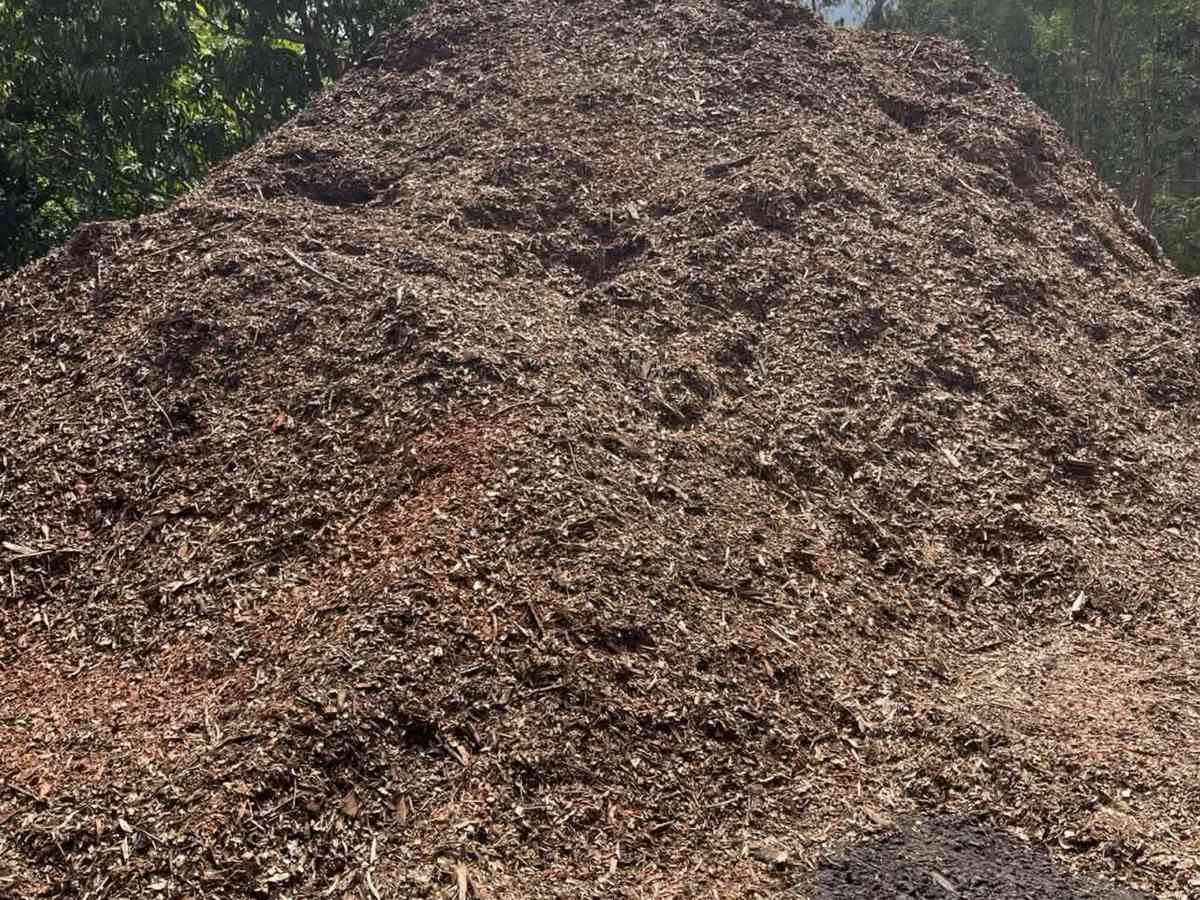
What to do with leftover stump grindings you cannot use
Compost them. Sawdust and chip are the brown half of a compost heap. Layer them with grass clippings, kitchen scraps or chook manure for the green half, keep the heap damp, and turn it when you remember. On their own they take a year or more to break down. With nitrogen and water they are usable in a season.
If there is nowhere to put them, bin them. Brisbane City Council’s green waste recycling service takes loose bark, prunings and small branches up to 10 cm across and 75 cm long, collected fortnightly, and every standalone house in the city should have a green bin by now. A couple of barrows of clean grindings go in without drama. A pile that is half clay does not, because soil is not green waste. Pick the chips off the top for the bin and spread the dirty bottom of the pile back on the garden.
One more thing before anything leaves the block. Most of the southside, Logan and Ipswich sits inside the fire ant biosecurity zone, and moving soil, mulch or grindings out of the zone has rules attached. If you are carting a trailer-load to a mate’s place in another suburb, check the zone map first. On a job we can simply take the grindings away with us if you ask when you book.
What about pine tree stump grindings and camphor laurel?
Pine grindings are fine. They are slightly acidic, which natives and azaleas do not mind at all, and they break down slower than hardwood so a mulched bed stays covered longer. Radiata and hoop pine stumps also grind quickly and make a clean, pale chip. Camphor laurel is the one people ask about, because the leaves and fresh chip carry oils that can knock back seedlings. Aged for six months it is normal mulch; fresh, keep it off the vegie patch and off bare soil you are about to plant. The Mount Gravatt job where we ground eleven stumps on one block, two of them big camphor laurels, made enough grindings that the owner mulched every bed in the yard and still had a heap left to age by the back fence.
The stumps we will not spread at all are the sick ones. If the tree came down because of root rot or a fungus at the base, bag or bin the grindings rather than spreading them under the other trees. Cocos palm and other palm grindings are stringy and wet, compost badly and are better off in the green bin.
What does All Sites do with the grindings on the day?
Standard is to grind, chase the surface roots, rake the chips off the lawn into one pile and cover the hole roughly so nobody steps in it. From there it is your call: leave the pile for the garden, or we load it and take it away for an extra charge agreed before the day. If a slab, a fence post or new turf is going in the same spot, say so when you book and we grind deeper and clean the hole out properly. The site preparation guide covers what to have ready before the grinder turns up.
Not sure which bucket your pile falls into? Text a photo of the stump, or the stumps, to 0449 003 606 with your suburb, or use the quote form, and we will tell you what you are in for and what to do with the leftovers.
Frequently asked questions
What can I do with stump grindings from trees?
Spread them as mulch on garden beds, paths and around established trees, keeping them clear of the house and 100 mm away from trunks. Compost the sawdust and fine chip with grass clippings, mix a shovel or two through the topsoil you backfill the hole with, and put the rest in the green waste bin or have the grinder crew take it away.
Can I fill the stump hole with the grindings and lay turf?
Not with pure grindings. The wood rots and the ground sinks, leaving a soft dip in the lawn. Remove most of the grindings, backfill with topsoil or sandy loam in layers, mound it slightly above the lawn and let it settle. A small amount of grindings mixed through the soil is fine.
What should I do with leftover stump grindings I cannot use?
Compost them with grass clippings or manure, or put clean chips in Brisbane City Council's green waste bin, which takes loose bark, prunings and branches up to 10 cm across and is collected fortnightly. Grindings that are mostly soil are not green waste, so spread that part back on the garden.
What do I do with pine tree stump grindings?
Use them as mulch. Pine grindings are slightly acidic, suit natives and azaleas, and break down slower than hardwood so beds stay covered longer. Keep them away from the house and off vegie beds until they have aged a few months.
Are stump grindings bad for the soil?
Fresh grindings draw nitrogen from the soil as they break down, so they should sit on top as mulch rather than be dug in. Aged for three to six months they behave like any other wood-chip mulch. Fresh camphor laurel chip can suppress seedlings, so age it or keep it off planting areas.
Can I move stump grindings to another property?
Check the fire ant biosecurity zone map first. Most of Brisbane's southside, Logan and Ipswich is inside the zone, and moving soil, mulch or grindings out of it has rules attached. If in doubt, ask the grinder crew to take the grindings away as part of the job.