Trees in a city do a job most people never think about. They shade footpaths, hold slopes together, soften stormwater flows and quietly add value to every street they line. Keeping them healthy and safe as suburbs grow around them takes more than a chainsaw and a good eye — it takes proper assessment, and that is where consulting arborists come in.
What a Consulting Arborist Actually Does
A consulting arborist is the diagnostic side of the tree industry. Where a climbing arborist carries out the physical work of pruning or removal, a consulting arborist assesses trees, documents their condition and gives written advice that councils, builders, insurers and property owners can rely on. Their work sits behind development applications, insurance claims, disputes between neighbours and the long-term management plans that keep established trees standing safely for decades.
On any given week that might involve inspecting a fig tree that has started lifting a driveway, assessing whether a gum showing dieback is a hazard to a home, or mapping the root zones of protected trees on a block before construction begins.
Why Arborist Reports Matter
An arborist report turns a professional opinion into a document that carries weight. In South East Queensland, councils commonly require one before approving work on protected vegetation, and builders need them to show how trees will be retained and protected during construction. A thorough report typically covers:
- Tree health and structure — species, dimensions, vigour, defects and signs of disease or decay
- Risk assessment — the likelihood of failure and what or who is within striking distance
- Root zone protection — the area around a tree that must be preserved for it to survive nearby works
- Recommendations — whether a tree should be retained, pruned, monitored or removed, and how to do it safely
Without this paperwork, projects stall. A missing or inadequate report is one of the more common reasons tree-related development applications get sent back.
Where Stump Grinding Fits Into the Picture
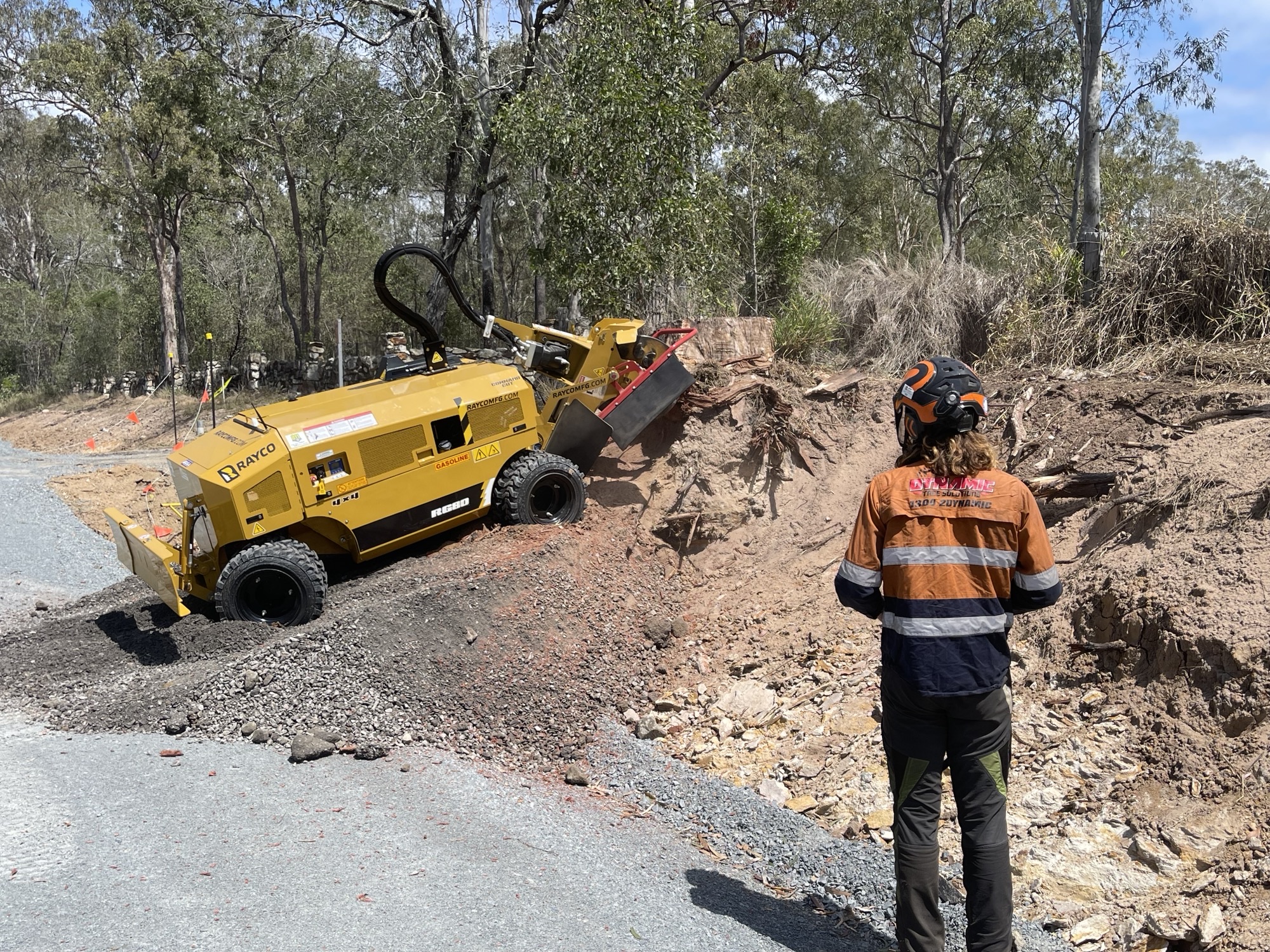
When a report does recommend removal, the job is not finished once the tree is down. The stump left behind still occupies the root zone, can harbour pests and fungal decay, and gets in the way of any landscaping or building work that follows. Grinding the stump out below ground level closes the loop — it removes the trip hazard, takes away the food source that attracts termites, and leaves the ground ready for turf, gardens or construction.
On development sites this sequencing matters. Stumps ground out early make way for earthworks and reduce the number of surprises when excavation starts. On residential blocks, it simply means the lawn can go back to being a lawn.
When to Bring In a Consulting Arborist
It is worth engaging a consulting arborist whenever a tree decision has consequences you cannot easily undo — before lodging a development application, when a large tree near a house starts showing signs of stress, after storm damage, or when a neighbour raises concerns about an overhanging tree. Our colleagues at Dynamic Tree Solutions provide qualified arborist reports across Brisbane and surrounding areas, and we work alongside them regularly on jobs that move from assessment through to removal and stump grinding.
Good urban tree management is not about removing trees — it is about making informed decisions so the right trees stay, the wrong ones go safely, and the ground they leave behind is properly finished. If a tree on your property has already come down and the stump is still sitting there, get in touch and we will take care of the last step.