
Do tree stumps attract termites? In Brisbane, yes. A dead stump is damp cellulose sitting in the soil, which is exactly what subterranean termites live on, and the rotting roots give a colony a ready-made road network towards the next bit of timber. The closer the stump is to the house, the more it matters. Grinding the stump out takes the food away; it does not treat a colony that has already moved in.
We get this question in two ways. The first is a building and pest report that says “remove timber in ground contact” with an arrow pointing at the old gum stump near the carport. The second is someone who has just had a tree taken down, looked at the fresh stump a metre off the slab, and had a bad feeling about it. Both are right to ask. Here is the straight answer, Brisbane edition, with no scare tactics.
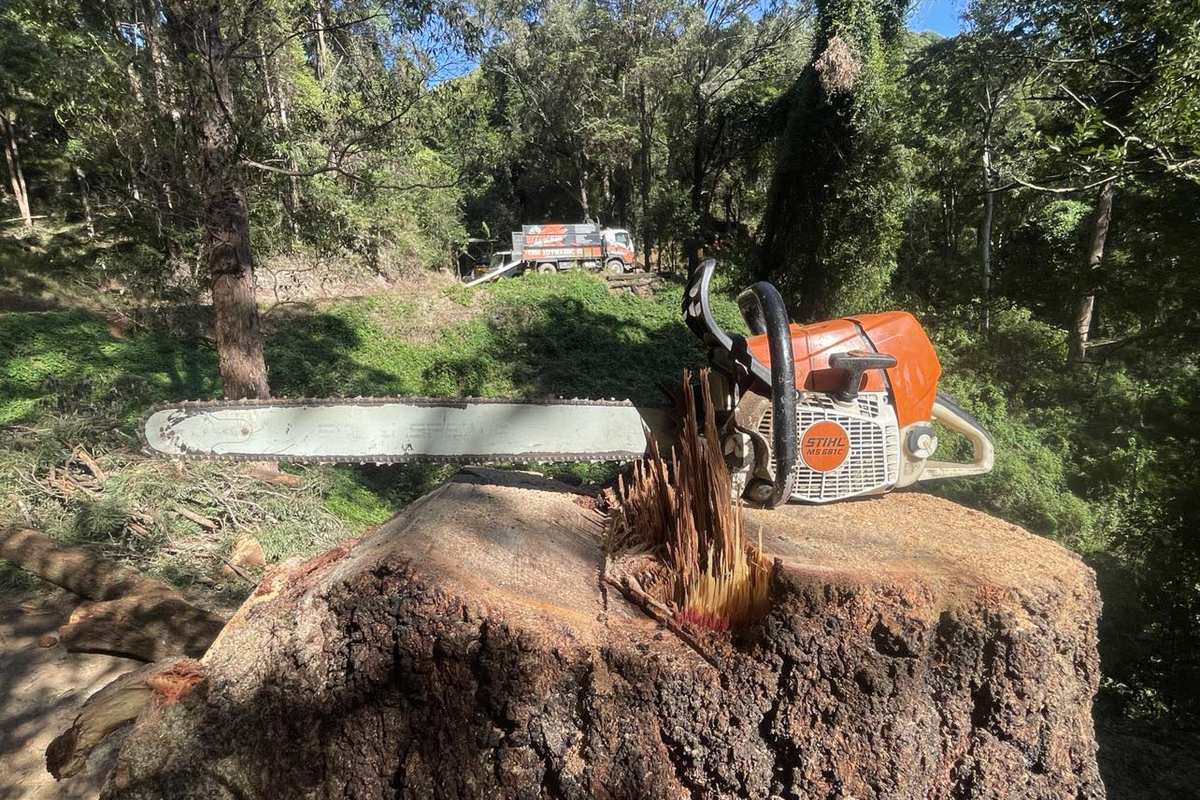
Do tree stumps cause termites?
No. A stump does not create termites. South East Queensland already has them, in the ground, in bushland, under most suburbs. What a stump does is give a foraging colony a reason to stop at your place. Subterranean termites need moisture and timber, and the Queensland Government’s guide to subterranean and drywood termites puts it plainly: they need contact with soil or a constant moisture source and have little resistance to drying out. A stump in the ground ticks every box. Shade, damp, soft timber, and roots that run under the lawn in every direction.
So the plain version of “do tree stumps attract termites” is this: the termites were coming past anyway. The stump is the reason they stay, breed up and start sending out mud tubes. Take it away and the colony has to go looking again.
How close to the house is too close?
The rule of thumb the pest inspectors we work with use is about 10 metres. Inside that, a stump is close enough that a colony feeding on it can reach the slab edge, a deck post, a fence rail or the bearers under a Queenslander without much effort. Outside it, the risk drops but does not vanish, because foraging galleries can run a long way through soft soil.
In practice the stumps that worry us are the ones you stop noticing. A big old gum stump cut years ago, sitting under the clothesline. The camphor laurel that came out before the extension went on, with the stump now a metre from the new slab. A row of palm stumps along the pool fence. The Moorooka enquiry we had recently was a textbook case: a mature eucalypt right in the yard, already carrying an active termite infestation, with the owner asking how much of the tree could be saved. The answer for the tree is one for an arborist. The answer for whatever is left in the ground afterwards is us, and it should not sit there for a year first.
| Stump | Termite risk | Why |
|---|---|---|
| Gum (eucalypt, ironbark, bloodwood) | High | Big, dense and slow to rot, so it feeds a colony for years |
| Camphor laurel | High | Large root plate, holds moisture, very common in older Brisbane yards |
| Jacaranda, poinciana, silky oak | Medium | Softer timber, rots faster, still a food source while it lasts |
| Cocos and foxtail palm | Low to medium | Fibrous and wet; more of a cockroach and fungus problem, but termites do move into palm trunks |
| Pine (hoop, slash, radiata) | High | Untreated softwood is a favourite; pine stumps go soft quickly |
| Poisoned stump of any species | Same as live | The poison killed the tree, not the termites that arrive later |
Do palm tree stumps attract termites?
Less than a gum stump, but do not write them off. A palm trunk is fibrous and holds a lot of water, so a palm stump tends to turn into a soggy, smelly mess that cockroaches and fungus love. Termites prefer proper timber. That said, we have cut down a foxtail palm in Ormeau that was riddled with them, trunk hollowed out from the inside, and it was dropped close to the ground specifically so the grinder could take the rest. A palm stump next to a timber deck or a pool fence post is still worth getting out, and the grinder goes through palm fibre quickly because there is no hardwood in it.
Palm stumps also sit in groups. Three or four cocos palms along a fence line means three or four stumps, and the multi-stump discount of up to 50 per cent is there for exactly that job.
Do tree stumps attract other bugs?
Yes, and some of them are the bigger nuisance day to day. A rotting stump in a Brisbane backyard is a block of flats for:
- Ants. Black house ants and the bigger meat ants nest in and under soft stumps and then trail into the kitchen.
- Cockroaches. Bush cockroaches breed in wet palm and soft stumps, especially under the leaf litter that collects around them.
- Wood borers and beetle larvae. Harmless to the house, but they turn the stump to powder faster and make it more attractive to termites.
- Fungus. Bracket fungi and mushrooms on a stump mean the timber is already breaking down, which is the stage termites like best.
None of that is a reason to panic. It is a reason to stop treating the stump as furniture. If it is within reach of the house and going soft, it needs to go.
Does grinding the stump fix the termite problem?
It fixes the food. It does not kill a colony. If you can see live termites in the stump, pale workers under the bark or mud tubes running up the outside, ring a pest controller first and let them treat it. Then we grind what is left. Grinding an active stump without treatment just scatters the workers while the nest, which is usually in the soil nearby, keeps going.
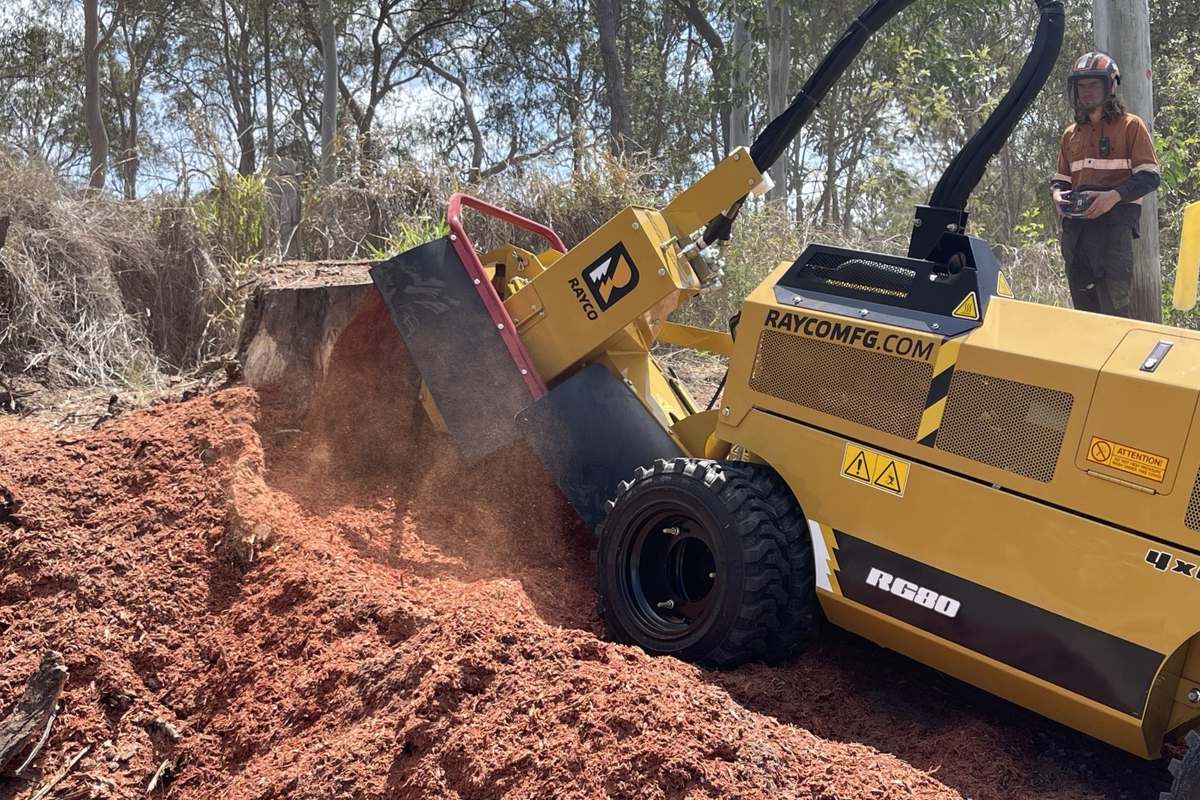
If the stump is clean, grinding is the prevention. We take the stump 200 to 300 millimetres below ground level and chase the main surface roots out, so the bulk of the timber becomes chips. The fine roots that stay behind dry out and break down on their own, with no moist core for a colony to settle into. Rake the chips off, backfill with soil and the spot can be turfed in a few weeks. For a typical single domestic stump that starts from $250; the detail is on our stump grinding cost page, and the practical side of termite-proofing a yard is in our guide to tree stumps and termite prevention, including what to do with the grindings.
One thing worth saying about the chips. Fresh grindings piled against the house are themselves timber in ground contact, which is the thing your pest report told you to get rid of. Use them on garden beds away from the slab, or have us take them away.
What should I do if my pest report mentions a stump?
Deal with it in this order. Read the report properly, because “timber in ground contact” can also mean sleepers, old fence posts and formwork left under the house, and it is easier to sort all of it in one go. If the report says the stump is active, book the pest controller first. If it is listed as a risk but not active, book the grinder. Keep the report, the pest treatment invoice and our invoice together, because the next inspection and your insurer will both want to see that the item was dealt with. The QBCC’s termite management guide for homeowners is a short read on how the barrier under your house is meant to work.
If the tree is still standing and the termites are in it, the removal comes first and that is climbing work for the tree removal side of the group. One call covers the removal, the stump and the clean-up, and the stump does not get left for a year to become the next problem.
Where do we see the worst of it?
Older suburbs with big trees and timber houses. The southside from Moorooka and Annerley through to Sunnybank is full of pre-war camphor laurels and gums that have come out over the years and left their stumps behind. Out our way in Forest Lake and across Ipswich it is more often the pine and gum stumps on the bigger blocks, where the stump was left because it was out of the way. Out of the way is fine until the extension or the new shed goes up next to it.
If there is a stump within a cricket pitch of your house and you are not sure what is living in it, text a photo to 0449 003 606 or use the quote form. We will tell you whether it needs the pest bloke first or just the grinder.
Frequently asked questions
Do tree stumps attract termites?
Yes. In Brisbane a dead stump in the ground is damp timber in contact with soil, which is what subterranean termites feed on, and the rotting roots give a colony tunnels towards other timber. A stump does not create termites, but it gives a passing colony a reason to settle at your place.
Do tree stumps cause termites?
No. Termites are already present across South East Queensland. A stump does not cause them; it feeds them. Removing the stump removes the food source, which is why pest inspectors list old stumps near the house as a risk item on building and pest reports.
How close to the house does a stump have to be to be a termite risk?
Pest inspectors generally treat anything within about 10 metres of the house as a risk, because a colony feeding on the stump can reach the slab edge, deck posts or bearers. Beyond that the risk drops but does not disappear, as foraging galleries can run a long way through soft soil.
Do palm tree stumps attract termites?
Less than hardwood stumps, because palm trunks are fibrous and wet, but termites do move into palm trunks and a palm stump is a strong attraction for cockroaches, ants and fungus. A palm stump beside a timber deck or pool fence post is still worth grinding out.
Does stump grinding get rid of termites?
Grinding removes the food, not the colony. If the stump has live termites or mud tubes, have a pest controller treat it first, then grind it. If the stump is clean, grinding it 200 to 300 mm below ground and chasing the surface roots is the prevention.
How much does it cost to grind a stump for termite reasons?
Stump grinding with All Sites starts from $250 for a typical single domestic stump, ground 200 to 300 mm below ground with the surface roots chased and the chips raked off. Small stumps added to the same booking are priced per stump, and there is a multi-stump discount of up to 50 per cent. Text a photo for a quote.